An 80-year-old ALS grandmother can return to her elegant and dignified elderly life!
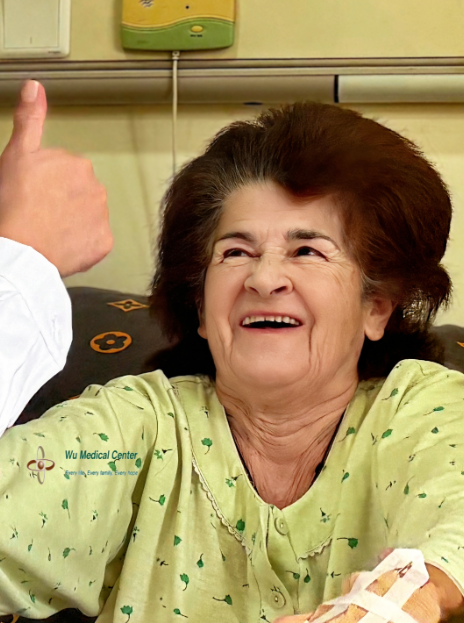 Ms. Efprepia Atherinou, an elegant 80-year-old grandmother from Greece, unfortunately suffers from ALS. Despite taking Riluzole 50mg twice daily, she experiences progressive limb weakness accompanied by muscle atrophy, making it difficult for her to stand or walk independently. Seeing her gradually weakening body, her family decided to help their beloved grandmother regain her former vitality!
Dr. Wu, a senior medical expert in neurology and a world-class stem cell clinical specialist, has focused on treating ALS with neural stem cells and mesenchymal stem cells combined with CAST for over 30 years. Using his unique, world-renowned, safe, and effective stem cell treatment methods, along with extensive clinical experience, he has successfully helped many ALS patients halt the progression of their disease, improve their symptoms, enhance their quality of life, and even return to their normal work.
Dr. Wu's original treatment technique, which combines neural stem cells and mesenchymal stem cells with CAST therapy, encompasses cutting-edge biological therapies of modern high technology; as an internal medicine expert with over 40 years of rich and successful clinical experience in safe and effective medication; and widely recognized rehabilitation methods, he has developed this unique clinical approach. This technique helps ALS patients to more quickly, effectively, smoothly, and durably halt the progression of the disease, improve symptoms, and enhance their quality of life.
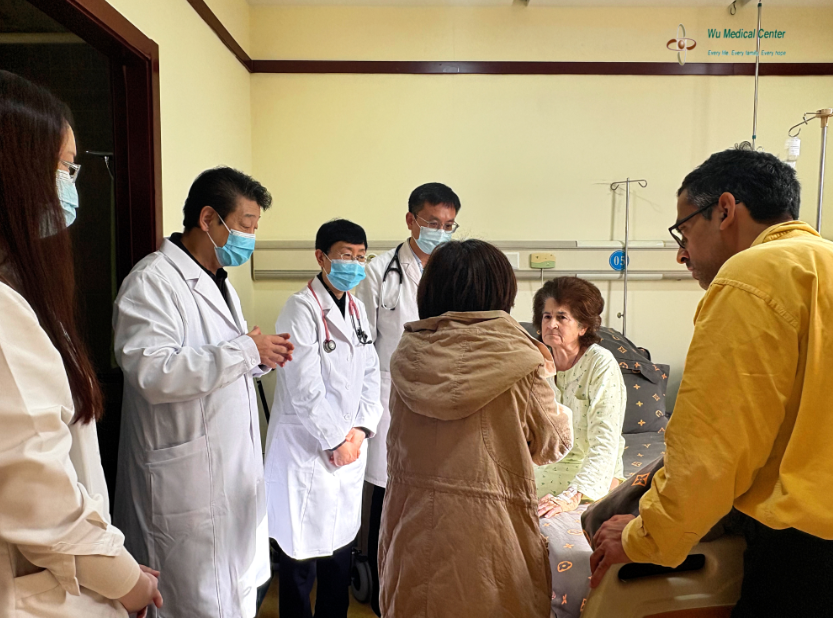
Dr. Wu's unique treatment technique for ALS has gained recognition and an excellent reputation among patients from various countries around the world. Ms. Efprepia Atherinou's family has finally waited for the opportunity to experience two weeks at Wu Medical Center, where she witnessed the miracle of halting the progression of her ALS, a condition deemed a "terminal illness" by the global community, and improving her symptoms!
After two weeks of inpatient treatment, Ms. Efprepia Atherinou's motor function significantly improved, with an overall increase of about 30%.
Before treatment, her heart rate was 90 beats per minute, her respiratory rate was 22 breaths per minute, and her blood oxygen level was 94%. Her respiratory activity was weakened. She had weak heart sounds, irregular rhythms, and could be heard having premature ventricular and atrial contractions.
After treatment, her respiratory function improved, with blood oxygen saturation mostly maintaining at 96%. Her heart function stabilized, with a noticeable reduction in the irregularities (atrial and ventricular premature contractions).
Prior to treatment, her left upper limb strength was grade 3-, and her right upper limb strength was also grade 3; her left hand grip strength was grade 1+, and her right hand grip strength was grade 3-. She could lift her left hand to her forehead while lying down, her left upper arm could lift off the bed but could not resist pressure, and her left wrist could perform flexion and extension without resistance. Only her middle finger could perform opposition, while the other fingers could hardly flex. Her right upper arm could lift off the bed and resist some pressure, although her right wrist strength and grip were weak, allowing for light resistance.
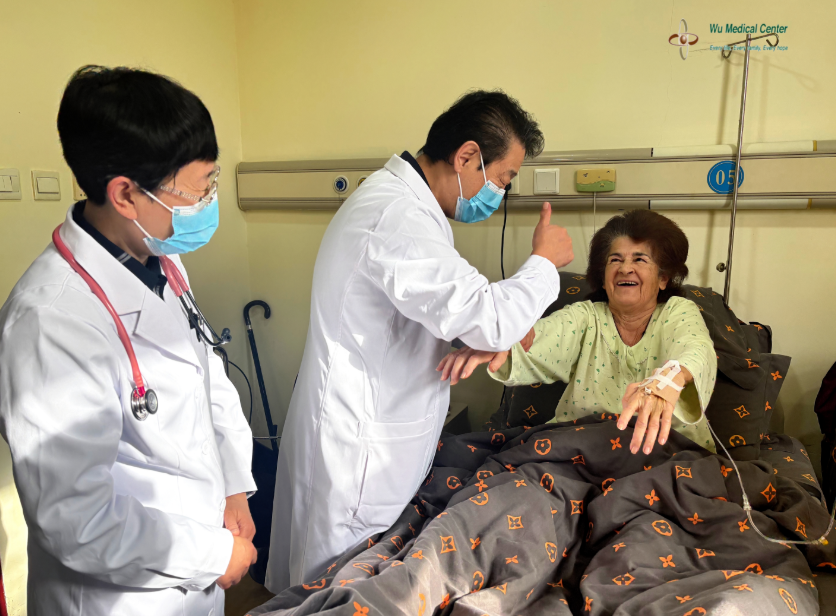
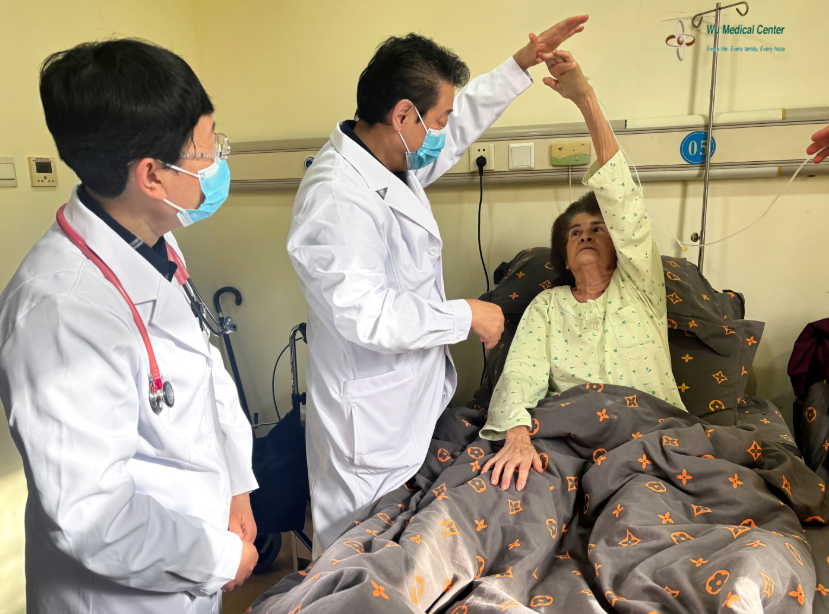
After treatment, her left upper limb strength improved to grade 4, with the ability to lift her arm above her head and resist some pressure. Her left wrist extension and flexion strength increased, allowing for slight resistance. Her right upper limb strength also improved to grade 4, with the ability to resist greater resistance and increased load capacity. Her left hand grip strength improved to grade 3, allowing her to grasp another person's hand and resist some pressure, while her right hand grip strength improved to grade 4.
Before treatment, her lower limb strength was grade 3-, with the left side slightly weaker than the right. While lying down, she could lift her bent legs off the bed about 30cm, with the left leg lower and only maintaining this position for about 3 seconds. Her left ankle had minimal movement, while her right ankle could flex and extend. She could only stand independently for less than 3 seconds and could walk slowly for a short distance (10 meters) with assistance.
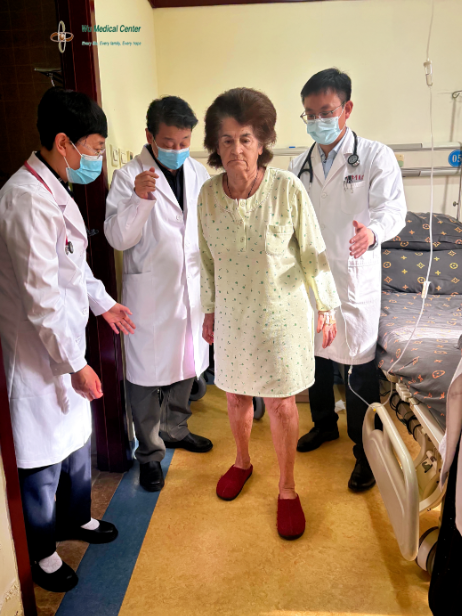
After treatment, her lower limb strength improved to grade 4-, enabling her to stand independently and walk about 10 meters unassisted. With a walker, she could walk approximately 50 meters. While lying down, she could lift her bent legs off the bed about 50cm for about 8 seconds and resist some pressure.
Now, her energy, stamina, and physical endurance have clearly improved.
We hope to accompany more patients like Ms. Efprepia Atherinou, who suffer from ALS, to personally experience the advanced stem cell + CAST treatment at Wu Medical Center, which differs from traditional medical approaches. Our goal is to halt the progression of the disease, improve motor function, enhance their quality of life, and allow them to enjoy their elderly years with elegance and dignity.
To learn more information of Ms. Efprepia Atherinou’s patient story, please refer to the following link:
Efprepia Atherinou-Amyotrophic Lateral Sclerosis (ALS)-(Greek)