Efprepia Atherinou-Amyotrophic Lateral Sclerosis (ALS)-(Greek)
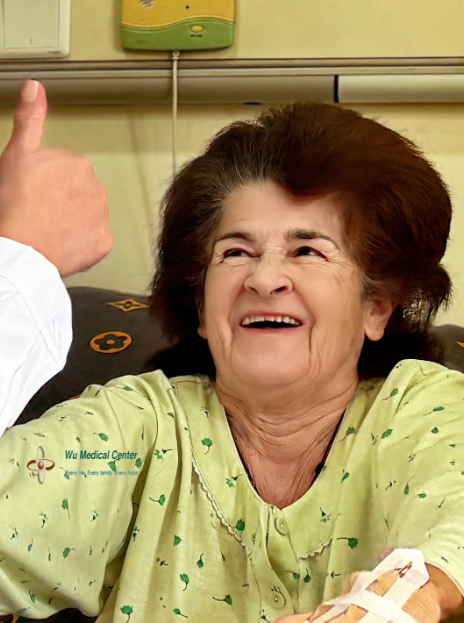 Patient Name: Efprepia Atherinou
Gender: Female
Age: 80 years old
Nationality: Greek
Diagnosis: Amyotrophic Lateral Sclerosis (ALS)
Condition upon Admission:
The patient was admitted primarily due to "progressive limb weakness with muscle atrophy for 2.5 years, worsening in the last 6 months," diagnosed with "amyotrophic lateral sclerosis." The main symptoms include progressive weakness in the limbs accompanied by muscle atrophy, and she is unable to stand or walk independently. Currently, she is taking Riluzole 50 mg, bid.
Physical Examination upon Admission:
The patient's heart rate was 90 beats per minute, respiratory rate was 22 breaths per minute, and blood oxygen saturation was 94%. There was muscle atrophy in all four limbs, more pronounced on the left side, with no obvious fasciculations observed. There was no cyanosis of the lips, and the oropharynx showed no congestion. Respiratory activity was diminished, with no significant dry or wet rales heard. Heart sounds were weak, and there was an irregular rhythm, with ventricular and atrial premature beats audible. There was no edema in the lower extremities.
Neurological Examination:
The patient was alert and in good spirits. Her speech and articulation were normal. Memory and calculation abilities were both intact. The nasolabial folds were symmetrical on both sides. Tongue movement was good, with slight muscle atrophy noted, and the tongue was agile. Chewing ability was adequate. Bilateral soft palate elevation was satisfactory, and the uvula was midline. She had good strength in neck rotation and shoulder shrugging. Strength in the left upper limb was grade 3-, and the right upper limb grade 3; grip strength in the left hand was grade 1+, with only the middle finger able to perform opposition; grip strength in the right hand was grade 3-. Lower limb strength was grade 3- bilaterally, with the left side slightly weaker than the right. Muscle tone in the limbs was generally normal. In the supine position, the left hand could be lifted to the forehead, and the left upper arm could be raised off the bed but cannot resist against pressure. The left wrist could perform flexion and extension movements but could not resist. Only the middle finger of the left hand could perform opposition, while the other fingers were almost unable to flex. The right upper arm could be lifted off the bed and could resist against some pressure; however, grip strength and wrist strength were weak, able to resist only light resistance. There was reduced strength in both lower limbs, with the patient able to raise both legs off the bed approximately 35 cm while bent, but the left leg was slightly lower and could only be maintained for about 3 seconds. The left ankle showed minimal movement, while the right ankle could perform flexion and extension but with weak resistance. The patient could stand independently for less than 3 seconds and could walk slowly over a short distance (approximately 10 meters) with assistance. Deep and superficial sensations were normal. Tendon reflexes were present in all limbs; bilateral Hoffmann's sign was positive, and bilateral Babinski's sign was negative. There were no signs of meningeal irritation.
Treatment Process:
The patient was admitted with a confirmed diagnosis of "amyotrophic lateral sclerosis." During her hospitalization, she received neural stem cell therapy to repair motor neuron damage, and mesenchymal stem cells were used to provide neurotrophic, endocrine, and immune support. Additionally, she was treated with edaravone, riluzole, neurotrophic factors, reduced glutathione, and other medications as part of CAST therapy, along with comprehensive rehabilitation treatment.
Post-Treatment Results:
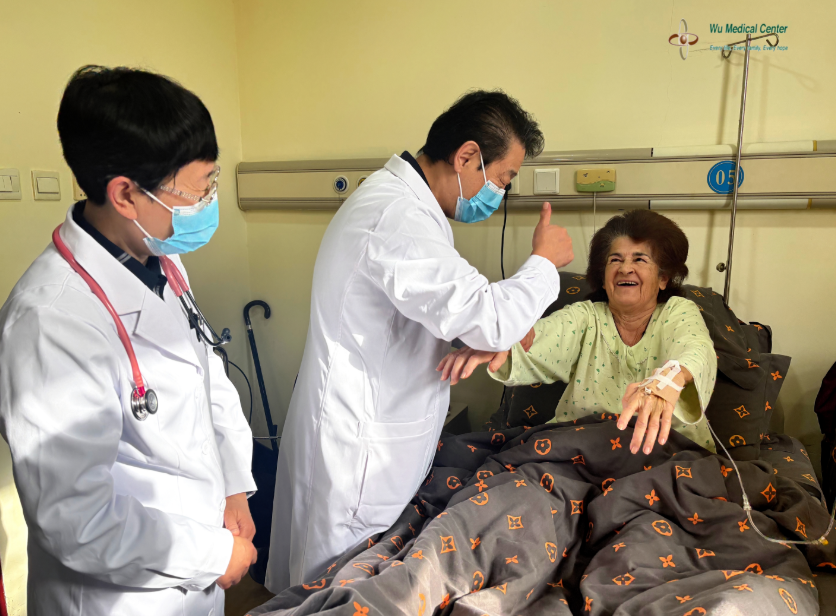
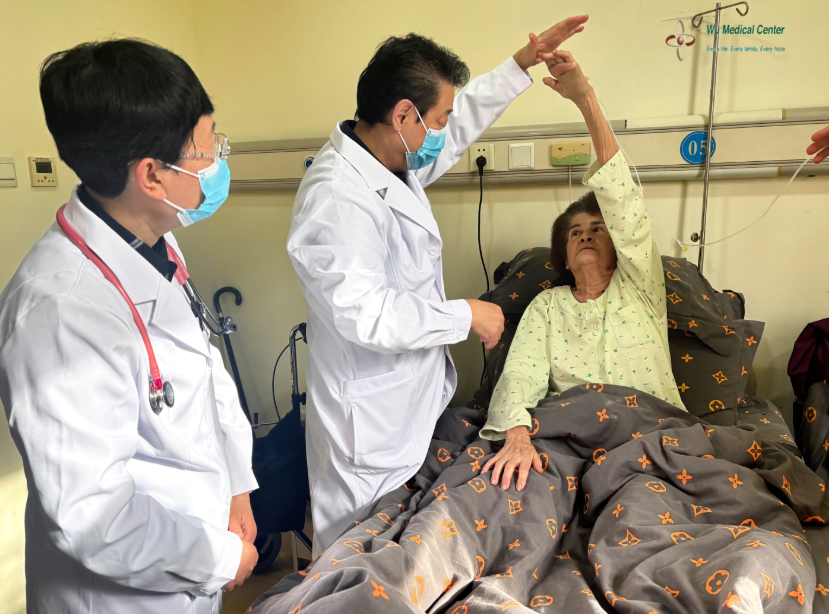
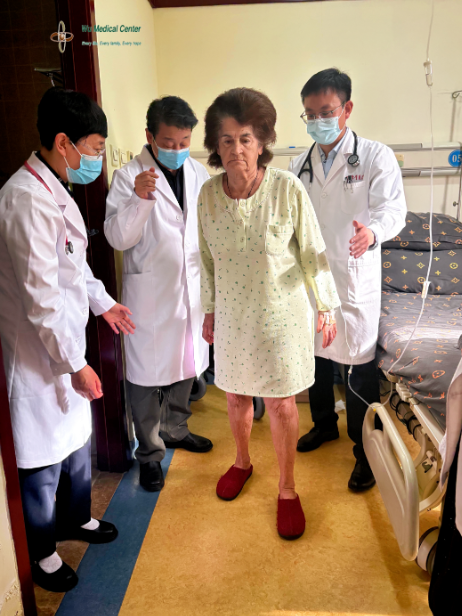
The patient's motor function has significantly improved, with an overall increase of approximately 30%. Her respiratory function has enhanced, and blood oxygen saturation can often be maintained at 96%. Cardiac function has stabilized compared to before, with a noticeable reduction in arrhythmias (premature atrial and ventricular contractions). There has been improvement in muscle strength in all four limbs: the strength in the left upper limb is grade 4, with the left arm able to lift above the head and resist some degree of pressure; strength in the left wrist for both extension and flexion has increased, with slight resistance possible. The strength in the right upper limb is also grade 4, able to resist greater pressure and with improved load-bearing capacity. Grip strength in the left hand is grade 3, allowing her to grasp another person's hand and resist some pressure, while grip strength in the right hand is grade 4. Both lower limbs show strength grade 4-, and she can stand independently, walking approximately 50 meters with the aid of a walker. In the supine position, she can raise both legs off the bed about 50 cm while bent and maintain this position for about 8 seconds. Her energy levels, physical fitness, and exercise endurance have also improved.