Hujová Jana-Motor Neuron Disease / Amyotrophic Lateral Sclerosis (ALS)-(Slovak)
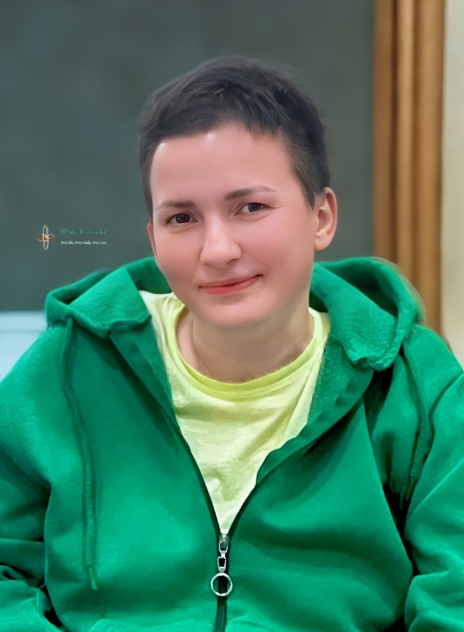 Patient Name: Hujová Jana
Gender: Female
Age: 41 years old
Nationality: Slovak
Diagnosis: Motor Neuron Disease / Amyotrophic Lateral Sclerosis (ALS)
Condition on Admission:
The patient was admitted with a primary complaint of progressive weakness in all four limbs, muscular atrophy and fasciculation for more than three and a half years, and was diagnosed with motor neuron disease/amyotrophic lateral sclerosis. She previously took Riluzole but discontinued the medication due to intolerance and poor therapeutic effect, resulting in continuous disease progression. At present, the patient presented with weakness in neck rotation and shoulder shrugging, limb weakness and muscular atrophy. She had difficulty lifting both arms, could not grasp objects with her hands, and was unable to stand or walk independently with both lower limbs. She also suffered from labored breathing and could not sleep in a supine position, having to stay in a semi-recumbent position, and was prone to physical fatigue.
Physical Examination on Admission:
The patient's respiratory rate was 22 breaths per minute, heart rate 72 beats per minute, and blood pressure 104/78 mmHg. Her heart rate rose to 85 beats per minute after slight physical activity. The blood oxygen saturation was 96%. Slight cyanosis of the lips was observed, with no pharyngeal congestion or swelling. In a semi-recumbent position, the patient presented with mildly decreased thoracic respiratory movement and weakened breath sounds in both lower lungs, without obvious dry or moist rales. The heart sounds were strong and regular, with no murmurs in each valve area. The abdomen was flat and soft, and the liver and spleen were not palpable below the costal margin. No edema was noted in both lower extremities.
Neurological Examination:
The patient was conscious and in fair mental status. Her voice was weakened with dysarthria. Her calculation, memory and orientation were basically normal. The tongue protruded in the midline with mild lingual muscle atrophy and slow tongue movement. The cheek-blowing and masticatory strength were acceptable. She had mild dysphagia and occasional choking when drinking water. The elevation strength of the bilateral soft palate was slightly decreased. The muscle strength of neck rotation and shoulder shrugging was grade 3+, with limited range of motion of the shoulders and neck. In the left upper limb, the proximal muscle strength was grade 1; left hand grip and wrist strength were grade 2-, accompanied by spastic flexion of the left fingers. In the right upper limb, the proximal muscle strength was grade 1+, enabling barely touching the lips in a standing position; right hand grip and wrist strength were grade 2, with nearly complete inability to grasp and limited flexion. Both upper limbs were almost incapable of resistance movement. The muscle strength of both lower limbs was grade 2+. The patient could not stand up from the bed independently, was basically unable to walk, and presented poor balance function. Mild muscular atrophy was visible in all four limbs with occasional fasciculation; limb sensation was generally normal. Hypotonia and weakened tendon reflexes were noted in both upper limbs, while lower limbs showed hypertonia and hyperactive tendon reflexes. Bilateral feet were in hyperextension. Pathological reflexes were positive in both upper limbs and absent in the lower limbs. The finger-to-nose test and alternating movement test of both upper limbs could not be completed, and the finger opposition test was nearly impossible to perform. The heel-shin test of both lower limbs was poorly completed. Meningeal irritation signs were negative.
Treatment Process:
The patient was definitely diagnosed with motor neuron disease / amyotrophic lateral sclerosis upon admission. She received neural stem cell therapy to repair motor nerve damage, and mesenchymal stem cells for neurotrophic support, endocrine regulation and immune regulation. Adjuvant medication treatment (CAST) including edaravone, riluzole, neurotrophic factors and reduced glutathione was administered, combined with comprehensive rehabilitation therapy.
Post-treatment Outcome:
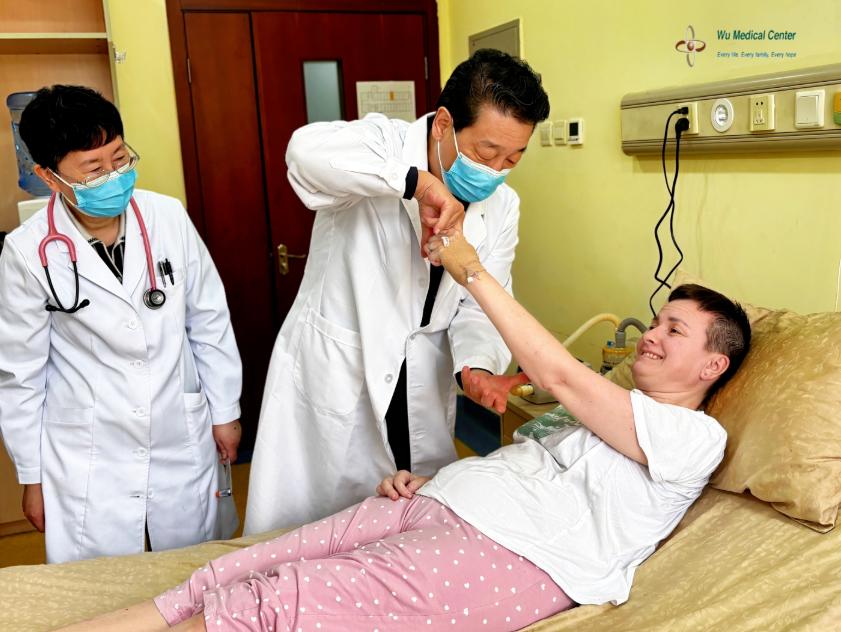
After treatment, the patient experienced halts disease progression and significant improvement in motor function. Her voice becomes louder and her speech clearer than before. The muscle strength for neck rotation and shoulder shrugging recover to nearly grade 5, with markedly improved and nearly unrestricted cervical range of motion. The lifting strength of both arms is enhanced. The proximal muscle strength of bilateral upper limbs reaches grade 3. In the supine position, she can lift her upper arms about 12 centimeters off the bed and hold the horizontal lifting position for approximately 3 seconds, with the ability to resist mild resistance in both arms. Her left hand grip strength is grade 3+, and right hand grip strength grade 3. She can grasp others’ fingers with certain resistance, hold a paper cup and bring it to her lips. Her respiratory function is improved, and she is able to sleep at a smaller reclining angle. Lower limb muscle strength is increased: the left leg is rated grade 4- and the right leg grade 3. When bending her legs for support in the supine position, she can maintain the left leg independently for around 10 seconds and the right leg for about 6 seconds. She can stand unassisted for roughly 3 seconds and walk slowly for 5 meters with the assistance of a walker, achieving basic walking ability with gradual continuous improvement in ambulation. In addition, her mental state and physical endurance have been greatly improved.